Roe deer in Denmark – the complete guide to roe deer, roebucks, does, and fawns

Roe deer are one of the best-known and most widespread deer species in Denmark. They are found in forests, hedgerows, fields, bogs, plantations, and even close to towns. For many Danish hunters, the roe deer is also the species they first get to know in real depth, because roe deer hunting requires both knowledge of the species, observation, an understanding of behavior, and discipline in culling.
In everyday speech, many use the word “rådyr” (roe deer) for the whole species, but hunting terminology distinguishes between the buck, the doe, and the fawn. In this guide, we review the biology, lifestyle, diet, annual cycle, rut, antlers, and significance for hunting of the roe deer.
What is a roe deer?
The roe deer is Denmark's smallest species of deer. The species is adapted to a varied landscape with a combination of cover and good food sources. Therefore, it thrives particularly well in mosaic landscapes featuring forests, scrub, hedgerows, and cultivated fields.
An adult animal is significantly smaller than both fallow deer and red deer. The buck can typically be identified by its antlers during the part of the year it carries them, while the doe does not have normal antlers. Both sexes have a distinct light patch at the rear, which is an important identifying feature in the terrain.
What are the male, female, and young of the roe deer called?
The adult male is called a roebuck or simply a buck. The adult female is called a doe. The young are called fawns.
A young female that has not yet had a fawn is often referred to as a "smalrå" (yearling doe). These terms are useful because hunting seasons and management distinguish between the different categories.
Where do roe deer live?
Roe deer are very adaptable. They can live in large, continuous forests, but the highest densities are often found in areas where different types of habitat meet.
A forest edge bordering a field, for example, provides both cover and food. A hedgerow can function as both shelter and a transit route. Small copses and scrub in agricultural land can provide roe deer with safe places to stay in the middle of an otherwise open landscape.
The species has also adapted to areas close to humans. Roe deer can today be seen in residential areas, cemeteries, and green urban areas, if they have access to peace, vegetation, and connected green corridors.
What do roe deer eat?
Roe deer are herbivores, but they do not graze in the same way as, for example, cattle. They prefer to select nutrient-rich plant parts and eat, among other things, herbs, leaves, buds, shoots, twigs, fruits, and agricultural crops.
Their choice of food changes throughout the year. In spring and summer, there are large quantities of fresh herbs and new plant shoots. In autumn, fruits, mast, and crops play a larger role, while winter places greater demands on finding buds, twigs, and other available plant food.
This selective foraging is one of the reasons why roe deer can thrive in very different landscapes, as long as there is variation in the vegetation.
When are roe deer active?
Roe deer can be active around the clock, but many observations occur around dawn and dusk. In quiet areas, the animals can also be seen in open spaces in the middle of the day, while strong human activity often causes them to shift a greater part of their activity to the quiet hours.
For the hunter, this means that early morning and late afternoon or evening are often obvious observation periods. However, it is not a rule that roe deer only move at sunrise and sunset.
Weather, food, disturbances, the season, and the individual location affect their rhythm.
Do roe deer live alone or in groups?
The social structure of the roe deer changes throughout the year.
In spring and summer, bucks are more territorial and live separately. Does often travel with their fawns. In winter, several animals can gather in smaller or larger groups in areas with good food. These winter groups are not "rudler" (herds) in the classic hunting sense; the term "rudel" is usually used for herds of larger deer species.
It is therefore common to see several roe deer together in a winter field, even though the same animals may be far more dispersed a few months later.
The roebuck's territory
During the spring, adult bucks become more territorial. They establish areas that they defend against other bucks.
The territory is marked, among other things, by fraying trees and bushes, scraping the ground, and scent marking. Therefore, fresh fraying can be a sign that a buck is actively using the area.
The size of the territory depends on, among other things, food, cover, population density, and terrain. A territory with high variation and abundant resources can accommodate more bucks in a relatively limited area than a uniform landscape with few attractive resting spots.
What are a roebuck's antlers?
The roebuck's antlers are called a "opsats". They consist of bone tissue and are formed anew each year.
After the old antlers have been shed, a new pair begins to grow. During growth, the antlers are covered in velvet, which is living skin with a blood supply. When the antlers are fully developed, the velvet dries up, and the buck removes it by rubbing the antlers against vegetation.
Fraying is therefore both part of the physical preparation of the antlers and a form of territorial marking.
When does the roebuck shed its antlers?
The timing varies with age and individual. Many older bucks shed relatively early in the winter, while younger bucks may carry their antlers longer.
New antlers grow throughout the winter and early spring. When the buck hunting season begins on May 16th, the vast majority of bucks will have fully frayed antlers.
It is important to understand that the size of the antlers does not alone reveal the exact age of the buck. Nutrition, genetics, health, and individual variations influence their development.
Can you determine the age of a roebuck by its antlers?
Not accurately. Large antlers do not necessarily equal an old buck, and small antlers do not necessarily mean the animal is young.
On live animals, you can instead try to place the buck in a broad age class by looking at its build, neck, head, posture, and behavior. Even for experienced hunters, determining the exact age of an adult live buck will often be a qualified guess.
After culling, the teeth can provide better information, especially in young animals. When the animal becomes older, the assessment of tooth wear also becomes more uncertain.
When are roe deer in rut?
The roe deer rut takes place primarily from mid-July to mid-August. There can be local and individual differences, but the period distinguishes the roe deer from red deer and fallow deer, which have their rut later in the year.
During the rut, both bucks and does change their behavior. The buck follows the doe closely, and one can experience characteristic chases where the animals move in circles around bushes or small trees. This can form so-called "witch rings" in the vegetation.
The doe is only receptive for a short period, which is why activity can be intense when the rut peaks.
The roe deer's special pregnancy
Roe deer have a remarkable reproductive biology. After mating in the summer, the fertilized egg enters a period of delayed development. The actual fetal development only gains momentum later in the year.
This is called delayed pregnancy or embryonic diapause.
This adaptation means that the doe can mate in the summer, while the fawns are still born at an appropriate time in the following spring, typically from mid-May into June.
How many fawns does a doe have?
Two fawns are common for adult does in good condition, but both one and three can occur. Young does often have fewer fawns.
The newborn fawns have a characteristic spotted coat, which provides camouflage in the vegetation. In the first few weeks, they lie very still and apart from each other in hiding, while the doe stays nearby and returns to nurse them.
A fawn lying alone in the grass is therefore usually not abandoned. As a rule, one should leave it in peace.
Why do fawns lie alone?
This behavior reduces the risk of predators finding both mother and fawn at the same time. The doe visits the fawn at intervals but does not stay constantly beside it.
If people find a fawn and pick it up thinking it is abandoned, they may therefore do more harm than good. Only if there are clear signs of injury or problems should one consider intervening.
The roe deer's coat throughout the year
Roe deer change between winter and summer coats.
The summer coat is typically a warm reddish-brown, while the winter coat is more grayish-brown and dense. The change is an adaptation to temperature and season and can also affect how the animal's body shape is perceived from a distance.
This is worth remembering when assessing age. A buck can seem stockier in its winter coat than in its short summer coat without having significantly changed its actual physical build.
What is the "mirror" on a roe deer?
The "mirror" (spejlet) is the light-colored marking on the animal's rear. In roe deer, it is typically white or very light and clearly visible when the animal flees.
The mirror can help with identification of the species and sex. In the doe, one can also see the so-called "apron" – a tuft of hair around the genital opening – while the buck has a "brush" under its belly.
However, it requires good observation conditions to use these features reliably from a distance.
How to read roe deer tracks
Roe deer leave far more than just footprints. Look for a combination of signs:
- hoof prints on soft ground
- trails through the vegetation
- fresh fraying on young trees
- scrapes and scent markings
- beds in tall grass or forest floor
- biting on buds and shoots
- droppings
A single track rarely tells the whole story. Several fresh signs together, however, can show that an area is used regularly.
Roe deer and wind
The roe deer's sense of smell is excellent. When hunting, the wind is therefore often more important than almost anything else.
A hunter can be completely hidden visually and still be detected from a long distance if their scent drifts directly toward the animal. Therefore, both stalking and waiting are usually planned with the wind as the starting point.
The wind is also not constant. Terrain, solar heating, forest edges, and depressions can create local air currents that cause the scent to move differently than the general wind direction.
Hunting the roebuck
The spring hunt for the roebuck is one of the most traditional Danish forms of hunting. It generally begins on May 16th and lasts until July 15th, with local exceptions.
Hunting is often practiced as stalking or from a stand. Both forms reward preparation and knowledge of the hunting ground.
Before the season, it can be advantageous to spend time on observation. Where do the bucks appear? Which trails do they use? Where do they stand in the first morning hours? Where are their territories?
The more you know before the hunt, the less you need to move around randomly once the season has begun.
Autumn hunting of roe deer
From October 1st, the general autumn hunt for roe deer opens, and both bucks, does, and fawns can, in principle, be hunted until January 31st.
The autumn hunt differs from the spring hunt. The animals' social structure is moving toward the winter pattern, the vegetation is changing, and roe deer may appear more frequently in smaller groups.
Management, therefore, is not just about selecting a buck. One should also take a position on the overall population and its gender and age composition.
Roe deer management on the grounds
Good roe deer management begins with knowing the population. It is difficult to carry out targeted culling if you do not know how many animals there are, or how they are distributed by gender and age.
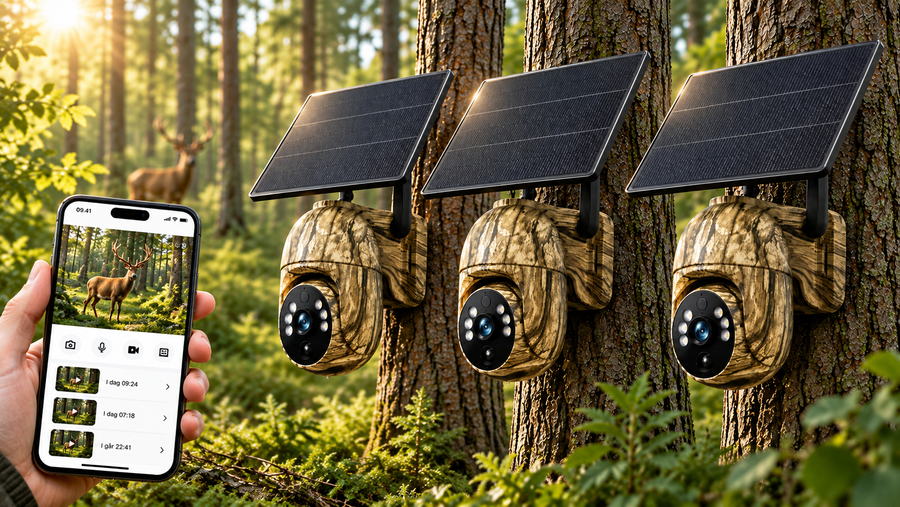
Observations throughout the year, trail cameras, knowledge of fawn production, and systematic registration of culled game can provide a better basis for decisions.
A common mistake is to focus almost exclusively on the bucks' antlers. A healthy population, however, also depends on the density of does and fawns, the condition of the animals, and the carrying capacity of the area.
How many roe deer can an area support?
There is not one number of animals per hectare that fits all hunting grounds. Carrying capacity depends on food, cover, soil type, winter conditions, agricultural operations, disturbances, and competition with other deer species.
A rich mosaic landscape can support a different density than a uniform plantation. Therefore, management should be based on local observations rather than general rules of thumb alone.
Signs of poor condition, many small animals, or extensive food competition may indicate that the population is too large in relation to local resources.
Roe deer and traffic
Roe deer are among the animals frequently involved in wildlife accidents. The risk increases where permanent trails cross roads and during periods of high activity.
As a driver, one should therefore be extra attentive at forest edges, hedgerows, and areas with wildlife warning signs, especially in the early and late hours.
If an animal is hit and runs from the scene, you should not pursue it through the terrain yourself. Mark the accident site as precisely as possible and follow the current procedures for calling for help with tracking.
Roe deer as game meat
Roe deer provide lean and fine game meat that can be used for far more than traditional roasts. Legs, saddle, shoulder, neck, and smaller cuts can all be utilized.
The quality depends to a great extent on the treatment after the shot. Rapid and hygienic field dressing, good cooling, and correct butchering are crucial for a good result.
It is therefore a natural part of the hunting craft to learn the entire process from shot to kitchen – not just the hunt itself.
Roe deer through the year's four seasons
The appearance and behavior of roe deer change significantly throughout the year. In winter, the coat is more grayish-brown and dense, and the animals can gather in looser groups in areas with good food. In the spring, the groups gradually break up, and the bucks become more territorial.
Summer is characterized by fawns, tall vegetation, and later, the rut. In autumn, both food selection and coat change again, and the animals often use field edges, mast-rich forests, and other energy-rich food sources.
For the hunter, this means that a hunting ground should never be evaluated based on one single month. A field that seems empty in June can be very attractive in October, while a good winter location is not necessarily used in the same way during the summer.
Roe deer's adaptation to the cultural landscape
Roe deer do well in the Danish mosaic landscape, where forests, hedgerows, fields, gardens, and small natural areas are close together. The species does not need enormous continuous forests if there is a suitable mix of cover and food.
This is one of the explanations for why roe deer can be seen in large forests, agricultural areas, and close to towns. At the same time, this increases the risk of traffic fatalities and conflicts involving gardens and plantings.
Management of roe deer, therefore, is not just about hunting. It is also about understanding how the animals move through a human-dominated landscape.
Frequently asked questions about roe deer
Are roe deer and "råvildt" the same?
"Rådyr" is often used as the common name for the species, while "råvildt" is the collective term used in hunting. The male is called a buck, the female a doe, and the young a fawn.
When are roe deer in rut?
The rut normally takes place from mid-July to mid-August, with local and individual variations.
When are fawns born?
Most fawns are born from mid-May to mid-June.
Why do roe deer have delayed pregnancy?
After mating, fetal development is delayed for several months. This means the fawn is born at a favorable time the following spring.
When does the roebuck get new antlers?
The buck sheds its old antlers in autumn and winter. A new pair grows throughout the winter and is usually fully frayed in the spring.
Can antlers tell the buck's age?
Not accurately. The antlers are influenced by, among other things, genetics, nutrition, and health. The body, behavior, and, after culling, the teeth provide a better basis for assessing the age class.
Roe deer reward the hunter who observes
The more time you spend watching roe deer without hunting them, the better you become at understanding the species. You learn the established trails, the variation between individuals, the reactions to wind and disturbance, and the changes throughout the year.
This makes hunting more targeted and management better. The roe deer is at once a common Danish species and an animal with a complex biology, which you can continue to learn new things about throughout a whole hunter's life.
Cover photo: Bengt Nyman, CC BY 2.0, via Wikimedia Commons (source)
Relevant gear for observation and hunting
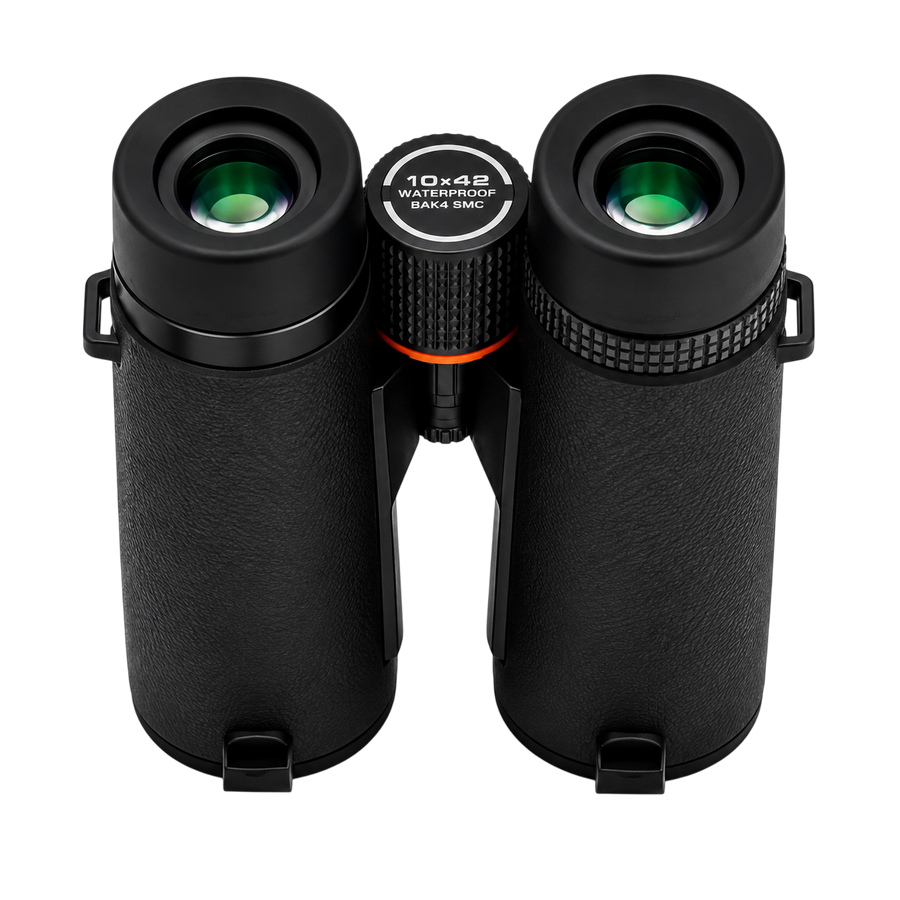
If you want to observe and identify game at a distance, take a look at our hunting binoculars and laser rangefinder. To follow activity on your hunting ground when you are not there yourself, you will find our trail cameras. If you are unsure which model to choose, you can also read our guides to 10×42 vs. 10×50 vs. 12×50 and choosing a HuntLive camera.